


Wounded Deer Tracking
Our dogs work the trail from the hit site with Nick, their handler, following the scent of the wounded deer.

Mosquito Creek 'Houlas is a big game recovery team based in St. Paris, Ohio. Our trained Catahoula Leopard Dogs help hunters find wounded deer when the blood trail gets hard to follow or disappears.
Call early. The sooner we hear from you, the better we can plan the track with you.
We're currently in our fifth season of wounded deer tracking and recovery. Our experience involves more than simply putting a dog on a blood trail. We work with hunters to evaluate shot placement, discuss appropriate wait times, and develop a recovery plan before beginning a track.
Our dogs work the trail from the hit site with Nick, their handler, following the scent of the wounded deer.
When the blood thins out or stops, a trained dog can keep working where the visible trail ends.
Tell us where you hit, how the deer reacted and what you found at the hit site. We'll help you read the signs and decide when to start.
From the first call to the end of the track, we help you do everything possible to recover your deer, with respect for the animal.
Luna, Archer and Tydus work the trail with Nick, their handler, who answers your questions and explains what the dogs are doing along the way.
 UBT Level I & II
An experienced, UBT Level I & II certified Catahoula Leopard Dog. Luna is a determined tracker who has worked some very challenging trails, including tracks where visible blood was limited or disappeared entirely.
 UBT Level I & II
Also a UBT Level I & II certified Catahoula Leopard Dog. Archer is a methodical tracker with excellent line discipline. He works with both ground scent and air scent and keeps his focus through difficult conditions.

Our veteran Catahoula and the senior member of the team. Tydus is a high-energy tracker who likes to cover ground and work with his nose, especially air scent. He's semi-retired now, but still comes out for selected tracks.
Our mission is to honor every animal with dignity and respect, support every hunter, and do everything we reasonably can to bring closure to each situation.
We understand that not every wounded deer can be recovered. We believe in honest assessments, ethical recovery practices, and giving every track the attention it deserves.
Our Catahoulas are UBT certified and tested in the real world. We train year-round so we're ready when you need us.
We've had the privilege to recover many deer over the years. We know what it takes to get the job done.
We're not just looking for blood—we're looking for your deer. Our goal is ethical, respectful, and effective recovery.
We treat every call with urgency, every hunter with respect, and every search with heart.
Serving all across Ohio, schedule permitting. If you need us, we'll come.
We keep you updated every step of the way. You'll never be left wondering.


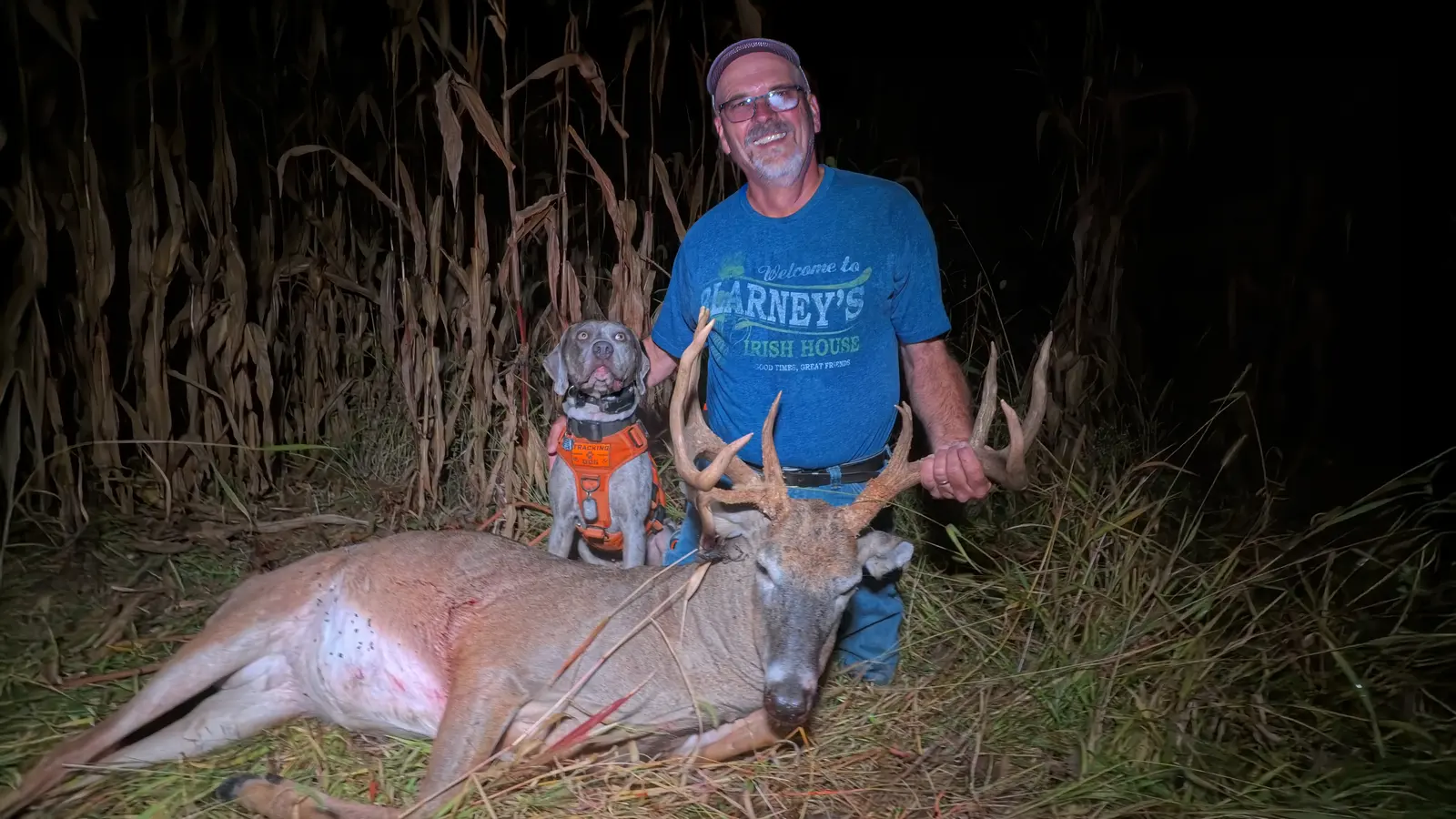


"I appreciated Nick taking the time to explain what his dogs were doing in the situation, answer my questions, and help me understand the importance of proper wait times and how they can affect a recovery. They gave me clarity and confidence throughout the entire process."
"I definitely recommend Nick to anyone needing help finding their deer! I gave him a call when I knew I made a bad shot. He told me to back out and he would go home and get his dogs. Over an hour drive away he showed up and located my deer within 20 mins. It was awesome watching him work with Archer. Thank you Nick!"
"Nick & Archer made the difference in how my son's first deer recovery turned out. Liam made a good shot on the deer but the deer didn't start leaving visible sign until the 100 yd mark (350 legend). One thing that impressed me most about Nick is how far (2 plus hours) he was willing to travel to help us out. Exceptional team & beyond dedicated to the resource & outdoorsman. Thank you!"
"Nick and Luna did an outstanding job for me. Found the deer in almost exactly 1/2 hour. Nick was great as he explained exactly how he and Luna did their job. I highly recommend them!!"
"Nick did a fantastic job and the dog found my deer very quickly. Response was prompt and answered all of my questions. Was even able to come out pretty late at night. Highly recommend!"
"Nick and his dogs were fantastic helping my daughter find her first deer. They went above and beyond expectation, and ended up with a successful recovery. Highly recommend!"

When in doubt,
Back out.
We'll take it from there.
We strongly encourage hunters to contact us early after a questionable shot, even if they aren't sure they'll need a tracking dog. Proper decisions immediately after the shot can make a tremendous difference in the outcome.
Call 937-896-2024If they walk away, treat as a liver or gut shot.
These are just rough wait time estimates, wait times can vary depending on many other determining factors. Rut & cool weather can extend times. Early season & hot weather may shorten.
 (click to enlarge)
Contact us as soon as possible after the shot. You don't need to wait until you're ready to begin tracking or until you've lost the blood trail.
Proper wait times depend on shot placement and the circumstances surrounding the shot. Reaching out early allows us to discuss what happened, evaluate the situation, and recommend an appropriate wait time and recovery plan.
Calling early doesn't mean tracking early. Giving a wounded deer adequate time and avoiding unnecessary pressure can make a significant difference in the chances of a successful recovery.
Stop, mark the hit site and the last blood you found, and back out quietly. Stay to the side of the trail, and avoid grid searching: it can destroy the scent line and spread it over a much larger area. Then call us and tell us what you've found.
Often, yes. A trained dog follows the scent of the wounded deer, not only the blood you can see. Every situation is different, and no tracker can recover every deer, but a dog can keep working where the visible trail ends.
Rain, wind, and changing weather conditions can make tracking more challenging, but they don't necessarily prevent a trained tracking dog from following a wounded deer.
Even when rain washes away visible blood, scent may still remain for a dog to work. Every situation is different, so don't assume a trail is lost simply because bad weather is approaching.
Most importantly, don't rush your search or shorten recommended wait times just to beat the rain. Contact us early so we can evaluate the situation and develop the best recovery plan.
We're based in St. Paris and serve Champaign County, surrounding counties, and hunters throughout Ohio as availability allows.
Yes. Luna and Archer are United Blood Trackers Level I & II certified, and Tydus is our experienced, semi-retired veteran tracking dog.
When the deer was shot, where you believe it was hit, how it reacted, what equipment was used, what evidence was found (with clear photos), how long you waited before tracking, how far it has been tracked or searched for, whether a grid search or another tracking dog has been used, whether you've contacted another tracker or drone team, and whether you have tracking permission, including neighboring properties.
The dog's behavior on the track, together with the sign we find, can tell us a lot, including when a deer may still be up and moving. If that happens, we'll talk with you about the best next step, which may be backing out and giving it more time.
Yes. While excessive searching can make a track more challenging, a trained tracking dog may still be able to help. Human foot traffic, disturbed scent, and pushing a wounded deer can complicate recovery efforts, which is why we recommend contacting us before conducting an extensive search.
If you've already searched, don't hesitate to call. Let us know what's been done so we can evaluate the situation.
Don't wait until you've exhausted every option. Contact Mosquito Creek ’Houlas to discuss your situation.
We're happy to help you determine the next step, even if a tracking dog isn't needed.


Don't let your harvest go unrecovered. Call the team hunters trust.
Based in St. Paris, Ohio, we serve Champaign County, surrounding counties, and hunters throughout Ohio as availability allows.
937-896-2024

